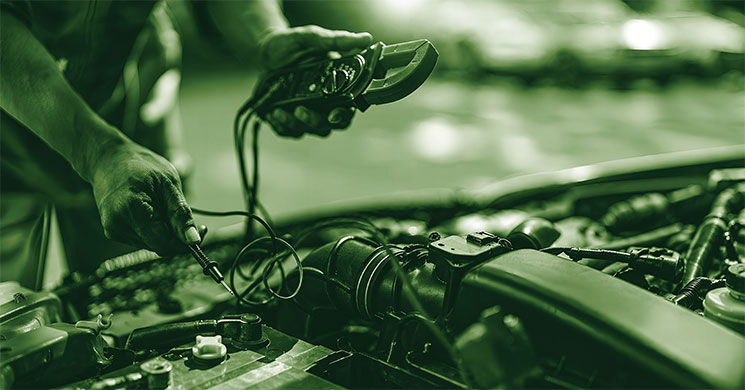
A parked car still draws small amounts of power for the clock, alarm, and keyless entry systems. If the drain is faster than normal, a stuck relay, a faulty light, or an aftermarket accessory left wired in is usually the cause.
A car battery usually drains fast because of one of seven things: lights or accessories left on, loose or corroded terminals, a parasitic electrical drain, a failing alternator, an old battery nearing the end of its life, too many short trips, or extreme heat affecting the battery's chemistry. Most of these are simple to check yourself before assuming the battery needs replacing.
Here's each cause explained plainly, with the fix that actually addresses it.
Cause: Headlights, interior lights, or a glovebox light left on after the car is switched off will drain the battery steadily, since nothing is recharging it while the engine is off.
Fix: Get into the habit of checking all lights before locking up, and confirm the boot and doors are fully shut - an ajar door often keeps interior lights on without being obvious from outside.
Cause: Vibration from regular driving can loosen terminal connections over time, and corrosion - the white or bluish crust that forms on terminals - blocks the flow of current between the battery and the car's electrical system.
Fix: Check that terminals are tight and free of buildup. Corrosion can be cleaned off carefully, but if it recurs quickly, the terminal or clamp itself may need replacing.
Cause: Some power draw with the car off is completely normal - clocks, alarm systems, and keyless entry receivers all use a small amount of current. A parasitic drain becomes a problem when something abnormal keeps pulling power, such as a stuck relay, a dashcam left wired in without an ignition-linked circuit, or a module that isn't entering sleep mode.
Fix: Unplug aftermarket accessories when the car is parked for extended periods. If the drain persists, tracing the exact circuit needs a multimeter test, which is worth having a technician do rather than guessing.
Cause: The alternator recharges the battery while you drive. If it isn't producing enough voltage, the battery never returns to a full charge, and it drains a little further with every trip until it's too weak to start the car.
Fix: Watch for dimming headlights or a battery warning light while driving - both point to the alternator rather than the battery itself. A charging system test will confirm whether the alternator is the actual cause.
Cause: Most car batteries have a working life of 3-5 years. As a battery ages, its ability to hold a full charge declines, so it drains faster even under completely normal use.
Fix: If your battery is in this age range and shows other signs of wear - slow cranking, a swollen case, or repeated jump-starts - a battery health check will confirm whether it's simply due for replacement.
Cause: Starting the engine uses a significant burst of battery power, and the alternator needs a reasonable drive length to recharge what was used. Frequent short trips - especially under 15-20 minutes - don't give the alternator enough time to fully replenish the battery, so it runs down gradually over repeated short journeys.
Fix: If most of your driving is short city hops, an occasional longer drive helps the battery recover fully, or a periodic maintenance charge can top it up between trips.
Cause: Indian summers are particularly hard on batteries - sustained high temperatures accelerate fluid evaporation inside the battery and speed up internal corrosion, both of which shorten its effective life and reduce how well it holds charge.
Fix: Parking in shade where possible helps, but heat-related degradation is largely a durability issue - getting the battery's health checked before and after peak summer months catches problems before they turn into a no-start morning.
If you've checked the obvious causes and the battery is still draining faster than it should, guessing further usually just leads to replacing parts that weren't the problem. Amaron Assist offers doorstep battery health checks that test the battery, terminals, and charging system at your location, so you get a clear answer on what's actually causing the drain before spending on a fix that might not be the right one.
A parked car still draws small amounts of power for the clock, alarm, and keyless entry systems. If the drain is faster than normal, a stuck relay, a faulty light, or an aftermarket accessory left wired in is usually the cause.
Yes. Sustained high temperatures, common in Indian summers, accelerate fluid evaporation and internal corrosion inside the battery, both of which reduce its ability to hold a full charge.
If the battery drains overnight while parked, the battery or a parasitic drain is more likely. If it drains while driving or the headlights dim as you drive, the alternator is the more likely cause.
Frequent short trips don't damage the battery directly, but they don't give the alternator enough time to fully recharge it after starting, which causes the battery to run down gradually over repeated short journeys.
A battery health check every 6-12 months is reasonable, and it's worth doing one specifically before and after peak summer months, since heat is one of the most common causes of accelerated battery wear in Indian conditions.

In the domain of two-wheeler batteries, Amaron emerges as a symbol of reliability. Their products are meticulously designed using advanced technologies to ensure longevity.