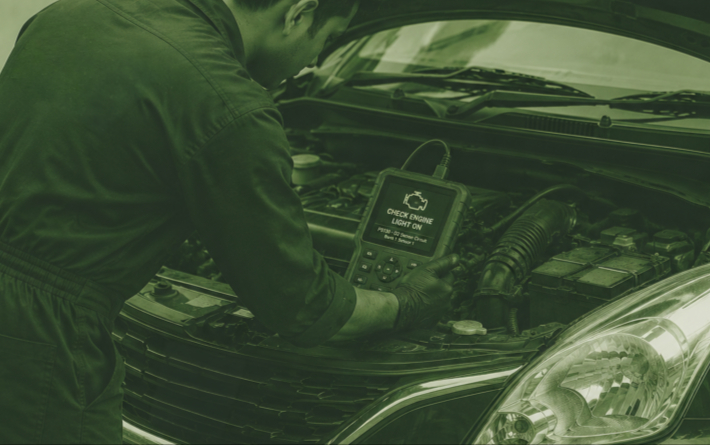
Check Engine Light On? What It Means & What to Do Next in India

Check Engine Light On

The check engine light means your car's computer has detected a fault and stored a diagnostic code - but it doesn't tell you what the fault is. A steady yellow light means drive carefully and get a scan within a few days. A flashing light means stop the car as soon as safely possible. Your first step in both cases is the same: check the fuel cap, note how the car is driving, and scan for the fault code with an OBD-II scanner. That code is what tells you whether you're looking at a ₹0 fix or a ₹30,000 one.

This guide covers exactly what each check engine light behaviour means, the most common causes in Indian conditions, how to get an accurate diagnosis, what repairs cost, and what happens when you keep driving with it on.

What Does the Check Engine Light Actually Mean?

The check engine light - officially called the Malfunction Indicator Lamp or MIL - is part of your car's On-Board Diagnostics system, known as OBD-II. Every car manufactured after 2000 is equipped with this system, which uses dozens of sensors to continuously monitor the engine, transmission, fuel system, and emissions components.

When any sensor reading falls outside the acceptable operating range and the ECU cannot correct it automatically, two things happen simultaneously: the check engine light illuminates on the dashboard, and a Diagnostic Trouble Code - a DTC - is stored in the ECU's memory. The light is the signal. The stored code is the information.

The check engine light does not monitor everything in the car. It is specifically tied to the engine, emissions system, and related components. It does not cover brakes, suspension, steering, or body systems - those have their own dedicated warning lights.

One important point for Indian car owners: the check engine light is frequently triggered by fuel quality. India's fuel supply, particularly at smaller petrol stations, can have quality variations that affect sensor readings - particularly the oxygen sensor and catalytic converter. A light that comes on shortly after filling up at an unfamiliar station is worth noting when describing the issue to a technician.

Steady vs Flashing - The Difference That Matters

The single most important thing to know about the check engine light is what its behaviour tells you about urgency. The same light icon means two very different things depending on how it is illuminated.

Light BehaviourWhat It MeansWhat to Do
Steady yellow / amberA fault has been detected and stored. The car is driveable but the issue needs diagnosis. Could be minor or significant - the code determines this.Do not panic. Check the fuel cap first. Book a diagnostic scan within a few days. Do not ignore indefinitely.
Flashing / blinkingAn active engine misfire is occurring right now. Unburnt fuel is entering the catalytic converter and can destroy it within minutes of continued driving.Stop driving as soon as safely possible. Do not restart the car to 'see if it fixes itself.' Call for assistance.
Comes on and goes offAn intermittent fault - the condition that triggered it resolved temporarily but the code remains stored in the ECU.The fault will return. Have the ECU scanned even though the light is currently off - the stored code is still there.
On with other red lightsMultiple system faults simultaneously - treat as urgent regardless of the check engine light's colour.Stop safely and assess all warning lights. Priority goes to any red light present.

Your First Steps When the Check Engine Light Comes On

When the light first illuminates, work through these steps in order before booking a diagnosis:

Check the fuel cap

The most common and easiest-to-fix cause. A loose or poorly seated fuel cap allows fuel vapour to escape, which the EVAP system detects as a leak and triggers the check engine light. Remove the cap completely, reseat it firmly until you hear it click, and drive normally for a day or two. If the light goes off, the cap was the cause.

Assess how the car is driving

Pay close attention to whether the car feels different. Note any rough idling, hesitation during acceleration, loss of power, unusual smells, or increased fuel consumption. These symptoms narrow down the likely cause significantly and help a technician diagnose faster.

Check other warning lights

Is the check engine light accompanied by the oil pressure, temperature, or battery warning light? Multiple lights together indicate a more serious compound fault. If a red warning light is also on, that takes priority.

Check the fuel you last used

If the light came on within a short time of filling up - especially at a new or unfamiliar petrol station - the fuel quality may have triggered a sensor fault. Note this for the technician.

Scan for fault codes

An OBD-II scanner plugged into the port under the dashboard reads the stored fault codes. This is the step that converts the light from a vague signal into a specific diagnostic pointer. Basic scanners are available for ₹1,500-₹3,000 and many service providers scan for free.

Most Common Check Engine Light Causes in India

The check engine light can be triggered by over 200 different fault codes. In Indian driving conditions, these are the causes that appear most frequently: 

Loose or Faulty Fuel Cap

Severity: Low

A loose, cracked, or missing fuel cap is the single most common trigger for a check engine light in India. It causes the EVAP emissions system to detect a vapour leak. No drivability symptoms, no performance change - just the light. Tightening or replacing the cap is often all that is needed. Cost to fix: ₹0-₹500.

Oxygen (O2) Sensor Failure

Severity: Medium

The oxygen sensor measures unburnt oxygen in the exhaust to help the ECU calculate the correct fuel mixture. A failing O2 sensor causes the engine to run rich (too much fuel) or lean (too little), reducing fuel efficiency by 10-15% and over time damaging the catalytic converter. Indian cars with high city mileage see O2 sensor failure commonly after 80,000-100,000 km. Cost to fix: ₹2,000-₹8,000.

Catalytic Converter Degradation

Severity: Medium-High

The catalytic converter reduces harmful exhaust emissions. It degrades over time - accelerated in India by poor fuel quality, oil burning, and unresolved O2 sensor faults that send excess fuel through the exhaust. Symptoms include reduced performance, poor fuel economy, and a sulphur or rotten egg smell from the exhaust. Cost to fix: ₹8,000-₹30,000+ depending on vehicle.

Spark Plug or Ignition Coil Fault

Severity: Medium-High (High if flashing)

Worn spark plugs or a failing ignition coil causes misfires - incomplete combustion in one or more cylinders. The check engine light flashes when a misfire is active. Symptoms include rough idling, hesitation under acceleration, and reduced power. In India, spark plug replacement is often delayed beyond the recommended interval, making this a common cause. Cost to fix: ₹500-₹4,000 for plugs; ₹2,000-₹8,000 for coils.

Mass Airflow (MAF) Sensor Fault

Severity: Medium

The MAF sensor measures the volume of air entering the engine so the ECU can calculate the correct fuel injection amount. In India, dusty driving conditions clog the MAF sensor faster than in cleaner environments. A dirty or failing MAF sensor causes poor fuel economy, rough idling, and hesitation. It is often cleanable rather than needing replacement. Cost to fix: ₹0 (cleaning) to ₹3,000-₹10,000 (replacement).

EGR Valve Carbon Build-Up

Severity: Low-Medium

The Exhaust Gas Recirculation valve reduces emissions by recirculating a portion of exhaust gases back into the engine. In Indian stop-go city traffic, the EGR valve accumulates carbon deposits faster than in cars used primarily on highways. Symptoms include rough idle and slightly reduced performance. Cost to fix: ₹500-₹2,000 for cleaning; ₹3,000-₹8,000 for replacement.

EVAP System Leak

Severity: Low

The Evaporative Emission Control System captures fuel vapours from the tank to prevent them escaping into the atmosphere. Beyond the fuel cap, small cracks in EVAP hoses or a faulty purge valve can trigger this code. No drivability impact - purely an emissions system fault. More common in older cars where rubber hoses have hardened from heat cycles. Cost to fix: ₹500-₹5,000 depending on the component.

Thermostat Fault

Severity: Medium

A faulty thermostat that sticks open prevents the engine from reaching operating temperature efficiently, causing the ECU to detect an abnormal warm-up pattern. In Indian summer conditions, a stuck-closed thermostat causes overheating - a much more urgent situation. Cost to fix: ₹800-₹3,000.

How to Diagnose the Check Engine Light

The check engine light tells you something is wrong. The OBD-II fault code tells you what. Here is the full diagnostic process:

  1. 1. Locate the OBD-II port - it is a 16-pin trapezoid-shaped connector found under the dashboard on the driver's side, usually within 60 cm of the steering wheel
  2. 2. Plug in the OBD-II scanner with the ignition in the OFF position, then turn ignition to ON without starting the engine
  3. 3. The scanner powers up and reads stored Diagnostic Trouble Codes from the ECU - codes are in the format P followed by four digits (e.g. P0420)
  4. 4. Note every code displayed - there may be multiple. Some are current faults, some may be historical pending codes
  5. 5. Look up each code: the first digit after P indicates the system (0 = powertrain/engine, 1 = manufacturer-specific). The remaining digits identify the specific circuit or component
  6. 6. Cross-reference the codes with the symptoms you noticed - a P0300 misfire code combined with rough idling confirms a misfire; a P0442 with no symptoms confirms an EVAP leak
  7. 7. A professional technician uses live data monitoring alongside codes - watching sensor readings in real time - to confirm the fault rather than replacing parts based on codes alone

Important: reading a fault code identifies the circuit or system involved - it does not always identify the exact failed component. A P0335 crankshaft position sensor code could mean the sensor has failed, or it could mean a wiring fault in that circuit. Accurate diagnosis requires a technician who can interpret the code in context with live sensor data and physical inspection.

Check Engine Light Repair Costs in India

Repair costs vary significantly by cause, vehicle type, and whether you use an authorised service centre or a trusted independent workshop. Here are realistic cost ranges for 2025:

CauseDIY Fix Possible?Approximate Cost (India)
Loose fuel capYes - tighten or replace₹0 - ₹500
Oxygen sensor replacementNo - requires reset after₹2,000 - ₹8,000
Spark plug replacementPartially₹500 - ₹4,000
Ignition coil replacementNo₹2,000 - ₹8,000 per coil
MAF sensor cleaningYes - with MAF cleaner spray₹200 - ₹500
MAF sensor replacementNo₹3,000 - ₹10,000
EGR valve cleaningPartially₹500 - ₹2,000
EGR valve replacementNo₹3,000 - ₹8,000
Catalytic converter replacementNo₹8,000 - ₹30,000+
EVAP system repairNo₹500 - ₹5,000
Thermostat replacementNo₹800 - ₹3,000
OBD-II diagnostic scan onlySelf-scan possible₹0 (self) - ₹500 (workshop)

Authorised service centres typically charge 20-40% more than reputable independent workshops for the same repair. For warranty-covered vehicles, authorised centres are recommended. For cars out of warranty, a trusted independent workshop with proper diagnostic equipment is a practical and cost-effective alternative.

What Happens If You Ignore the Check Engine Light

The check engine light does not go away on its own - and ignoring it does not keep the car running safely. Here is what happens when the light is left unaddressed:

  • A minor fault becomes a major one: A failing oxygen sensor that costs ₹3,000-₹8,000 to replace will, if ignored, send incorrect fuel readings to the ECU that damage the catalytic converter, which costs ₹8,000-₹30,000 to replace. The cascading damage pattern is consistent across most check engine light causes.
  • Fuel economy worsens progressively: Most faults that trigger the check engine light cause the engine to run outside its optimal efficiency range. A 10-15% increase in fuel consumption from an unresolved O2 sensor or MAF fault adds up to thousands of rupees in wasted fuel annually in Indian city driving.
  • The car fails emissions testing: While mandatory vehicle emission testing is still developing across India, modern cars with persistent check engine lights due to emissions system faults will fail PUC checks in states where stricter testing is applied.
  • The ECU enters limp mode: Some faults, if unresolved, cause the ECU to enter a protective reduced-power mode that limits engine output and performance to prevent further damage. The car will still run but noticeably less capably.
  • You lose diagnostic history: ECUs have a limited number of stored fault codes. New faults overwrite old ones. The longer you wait, the less diagnostic information is available when you finally have the car scanned.

How to Prevent the Check Engine Light from Coming On

Most check engine light triggers are preventable with consistent maintenance. These habits address the most common causes before they develop into faults:

  • Service the car on schedule: Oil changes, air filter, spark plug replacement, and fuel filter maintenance at the manufacturer's recommended intervals are the single most effective prevention. In Indian conditions - heat, dust, stop-go traffic - intervals should be followed strictly rather than stretched
  • Use fuel from reputable stations: Fuel quality directly affects oxygen sensor health, injector cleanliness, and catalytic converter longevity. Avoid filling from unfamiliar stations where possible, particularly for newer cars with sensitive emissions systems
  • Always close the fuel cap firmly: Confirm the click after every refuel. A cap that doesn't seat correctly is the simplest and most avoidable check engine light trigger
  • Don't ignore early warning signs: Rough idling, hesitation, reduced power, or a drop in fuel economy are all pre-warning signals that a fault is developing. Addressing them before the check engine light illuminates is always cheaper
  • Keep the air filter clean: In India's dusty urban environment, air filters clog faster than the standard replacement interval assumes. A clogged air filter causes the engine to run rich, stressing the oxygen sensor and catalytic converter
  • Have the MAF sensor inspected at every service: A quick clean with MAF cleaner spray costs ₹200 and prevents a ₹10,000 replacement. In dusty Indian cities, this is one of the most cost-effective maintenance steps available

Professional Car Diagnosis with Amaron Assist

When the check engine light comes on and you want an accurate diagnosis without the guesswork, Amaron Assist by Amara Raja Energy & Mobility sends a certified technician to your location for a professional check engine light meaning assessment - reading fault codes, interpreting live sensor data, and identifying the actual cause rather than suggesting parts replacements based on codes alone.

Transparent pricing, a flexible time slot, and a detailed service report after every diagnosis. No driving to a workshop with a warning light on, no waiting for an available bay - professional car diagnosis at your doorstep. 

Frequently Asked Questions

  • Can I drive with the check engine light on in India?

    If the check engine light is steady yellow and the car drives normally with no other warning lights, you can drive to a workshop or home - but get it diagnosed within a few days. If the check engine light is flashing, stop driving as soon as safely possible. A flashing light indicates an active misfire that can destroy the catalytic converter within minutes of continued driving.

  • How do I reset the check engine light?

    The check engine light can be cleared with an OBD-II scanner after the underlying fault is repaired. Clearing the code without fixing the fault will cause the light to return within a short drive. Do not disconnect the battery to clear the light - this erases all stored fault codes and ECU learning data, which can cause the car to run poorly until the ECU relearns its parameters. Always fix first, then reset.

  • What is the most common reason for the check engine light in India?

    A loose or faulty fuel cap is the single most common trigger - it costs nothing to fix and should always be checked first. Beyond that, oxygen sensor failure, EGR valve carbon build-up from city stop-go driving, and spark plug wear from delayed servicing are the most frequently seen causes in Indian cars.

  • How long can I ignore the check engine light? 

    There is no safe duration to ignore it. A steady light on a smoothly running car buys you days, not weeks, before a minor fault cascades into a more expensive one. A flashing light buys you minutes. The cost of diagnosis is always lower than the cost of the damage caused by delayed attention.

  • Does the check engine light always mean something serious? 

    No - it can indicate something as minor as a loose fuel cap or a dirty MAF sensor. It can also indicate something serious like a failing catalytic converter or an active engine misfire. The light itself cannot tell you which - only an OBD-II scan of the stored fault codes can. The behaviour of the light (steady vs flashing) gives you the urgency level; the fault code gives you the cause.

idea

In the domain of two-wheeler batteries, Amaron emerges as a symbol of reliability. Their products are meticulously designed using advanced technologies to ensure longevity.