 customercare@amararaja.com
 1800-571-4848
-
- Follow us:


Hello, Login/Signup
Signs of a Weak Bike Battery: How to Know When It's Time for a Replacement
 Amaron
10 mins read
Share this blog


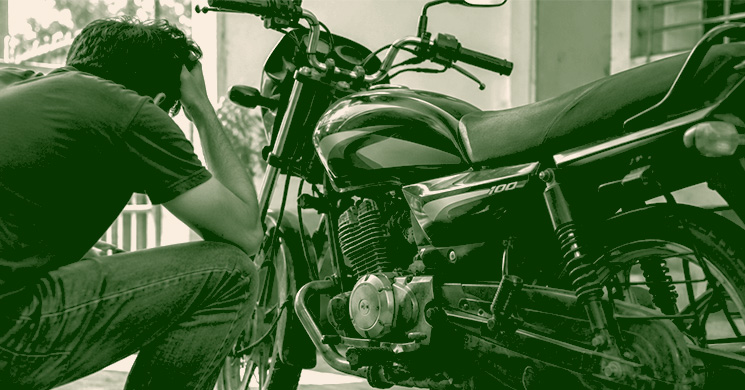
The most common signs of a weak bike battery are a sluggish electric start, a rapid clicking sound when pressing the starter button, a dim headlight that flickers or brightens only when revving the engine, and a faint, muffled horn. Left unaddressed, a deteriorating battery can strand you on the road or put excess load on your bike's starter motor and stator coil.
While a standard two-wheeler bike battery price for conventional motorcycles and scooters ranges from ₹1,000 to ₹2,800, ignoring early warning signs often turns a simple planned replacement into an inconvenient roadside breakdown. This guide breaks down how to identify battery degradation early, test your voltage at home, and choose the right replacement for your ride.
What Is a Weak Bike Battery?
A weak battery is one that can no longer hold sufficient charge or deliver the Cold Cranking Amps (CCA) needed to turn the starter motor over smoothly, even if it can still power small electrical components.
In two-wheelers, modern fuel-injection (FI) systems, always-on headlamps (AHO), and digital instrument consoles draw power the moment you turn the key. When the battery's internal plates suffer from sulfation or electrolyte loss, the voltage drops sharply under this initial load.
Here are the signs to look for:
- Longer engine start: Requires more cranking effort.
- Slower starter: It doesn't spin as hard as it used to.
- The horn sounds faint: It doesn't have the crisp volume you usually hear.
- Off lights are dim: Lights are dim with the engine off.
- Fast-draining battery: Won't hold charge for long.
- Bike struggles after sitting idle: Hard to start after parking.
- Electrical functions act inconsistently: Flickering or failure of indicator lights.
Why does a bike battery become weak?
A bike battery doesn't die overnight; it's a gradual process. Age is the most common cause, but daily routines matter too. Short trips don’t allow the battery time to recharge, and if you leave your bike unused for weeks, it steadily drains. Efficiency drops in extreme heat or cold, while weak or corroded connections impede power flow. A poor charging system or too many attachments can make the battery decline even faster.
Why do bike batteries fail more often during winter or after monsoon?
Cold temperatures can reduce a battery’s available cranking performance. The extent of the reduction depends on ambient temperature, state of charge, and the battery’s overall condition. Conversely, the intense heat of peak summer accelerates plate corrosion and electrolyte dry-out, leaving the battery structurally damaged just before the colder months arrive.
Weak Battery vs Completely Dead Battery
A weak battery might still power basics like the headlights or horn, but it won’t have enough strength to start the engine; a dead battery usually provides little to no power at all.
Let’s break down the comparison simply:
| Sign | Weak battery | Completely dead battery |
| Headlights/electricals | May operate but appear dim | May not operate |
| Horn | May sound weak | Silence |
| Starter motor | Turns slowly or struggles | May not respond |
| Vehicle starting | May start occasionally | Usually won’t start |
| Voltage | Below normal | Very low |
| Charging response | May accept some charge | Often won’t recover |
Can a weak battery be recharged?
Sometimes, yes. If the battery just lost its charge, recharging can bring it back, at least for a while. But if the battery is old, damaged, or can’t keep a charge, recharging won’t solve the real problem.
Note: If the same starting issues return soon after charging, it’s time to have both the battery and the charging system tested.
How to Check Battery Voltage at Home
Checking your bike or scooter’s battery voltage is a good way to see how healthy it is, and you can do this test at home with a digital multimeter.
How to check battery health:
- Access the Terminals: Turn off the ignition key and remove your bike’s side panel or seat to expose the battery terminals.
- Set the Meter: Turn the multimeter dial to DC Voltage (DCV), set to the 20V range.
- Connect the Probes: Place the red probe against the positive (+) terminal and the black probe against the negative (-) terminal.
- Read the Resting Voltage: Measure the reading with the engine completely off (ideally after the bike has been parked for a few hours).
Interpreting Your Readings
| Multimeter Reading (Engine Off) | Battery Condition | Action Required |
| 12.6V – 12.8V | 100% Charged | Battery is in healthy condition. |
| 12.4V – 12.5V | ~75% Charged | Fair condition; monitor or top up charge. |
| 12.0V – 12.3V | Low / Undercharged | Weak; recharge with a smart charger and check for parasitic drain. |
| Under 11.9V | Very low/ Deeply discharged | Recharge the battery and retest. If the voltage remains low or drops again quickly, have the battery professionally tested. |
What does a low voltage reading mean?
A low reading doesn't always mean a dead battery. Sometimes it just needs a good charge. If the voltage drops again after charging, or the battery struggles to hold a charge, it may be time for professional testing or replacement.
Important: If your bike is reluctant to crank up after sitting for a few days, check the voltage. This will quickly tell you whether the battery is short on charge or showing indications of weakening.
How to Test Battery Health
You can learn something from voltage readings, but not usually the whole story. A battery can be good at rest but can't deliver power when a starter motor needs it. Here’s an easy way to check your battery health at home:
Take a good look
Check for cracks, swelling, leaking, corrosion around the terminals, or loose connections. Stop using the battery if you notice any obvious damage and have it checked.
See how it starts
Even after recharging, does the starter motor sound slower than normal? This generally indicates a low battery.
Watch for frequent discharge.
If the battery goes flat after a short time parked, it may not be holding a charge properly. However, a faulty charging system or electrical drain might produce the same problems.
Take a professional test
A professional load test shows how the battery performs under real conditions and helps you decide whether you need a replacement.
What about lithium batteries?
Some two-wheeler applications use lithium technology. But choosing a lithium battery for a scooty should always be based on the vehicle manufacturer’s criteria and battery compatibility.
Just because lithium is newer technology doesn’t mean it’s always the right choice; swapping a traditional battery for a lithium one can cause problems if it doesn’t fit your scooter or bike. Check the manufacturer’s details before you change it.
How to Select the Correct Replacement Battery
Once you know your battery needs replacing, the next step is picking the right model. Amaron offers many bike batteries, but the best one isn’t always the cheapest or the biggest. It’s about matching your vehicle’s exact needs.
Check these specifications before buying
| Specification | What to check |
| Voltage | Must match your vehicle’s requirement (usually 12V). |
| Ah rating | Follow the recommended battery capacity. |
| Dimensions | Make sure the battery fits securely in the compartment. |
| Terminal arrangement | Check that the terminals are aligned correctly. |
| Battery type | Choose the type specified for your vehicle. |
| Model compatibility | Confirm that the battery is designed for your bike or scooter. |
Does price determine battery quality?
Not always. A cheaper battery might not fit well, while a more expensive one could have features you don’t need. It’s smarter to compare specifications, warranty, and brand support instead of focusing only on two-wheeler battery price.
Considering Lithium Batteries
Some scooters and motorcycles use lithium batteries, but they aren’t a one-size-fits-all solution. Always check the manufacturer’s guidelines on voltage, size, charging needs, and compatibility. A lithium battery not made for your scooter might cause more problems than it fixes.
A simple replacement checklist
Things to remember before purchasing an Amaron battery:
- Type and model of your bike or scooter
- Suggested voltage and Ah capacity
- Battery size and terminal position
- Right battery type
- Amaron-compatible model
- Warranty & after-sales service
- Requirements for installation
If your battery keeps getting weak, it’s a good idea to check the charging system too. A new battery won’t help much if your vehicle isn’t charging it correctly.
Conclusion
Have you ever parked your bike and noticed it takes longer to start, or the horn sounds quieter, or the lights aren’t as bright? These common signs usually mean the battery is dying. Checking the voltage at home with a multimeter is a good first step, but remember voltage doesn’t tell the whole story. If the problem continues, it’s a good idea to check both the battery and charging system together.
When it’s time to replace your battery, focus on compatibility rather than scooter battery price or size. Choose one that matches your vehicle’s recommended voltage, Ah rating, size, terminal position, and battery type. Amaron offers a wide range of two-wheeler batteries, so you can find the right one for your scooter or bike based on your riding needs. Watch for these signs and specs, and replace your battery on time to keep your vehicle reliable when you need it.

×
In the domain of two-wheeler batteries, Amaron emerges as a symbol of reliability. Their products are meticulously designed using advanced technologies to ensure longevity.