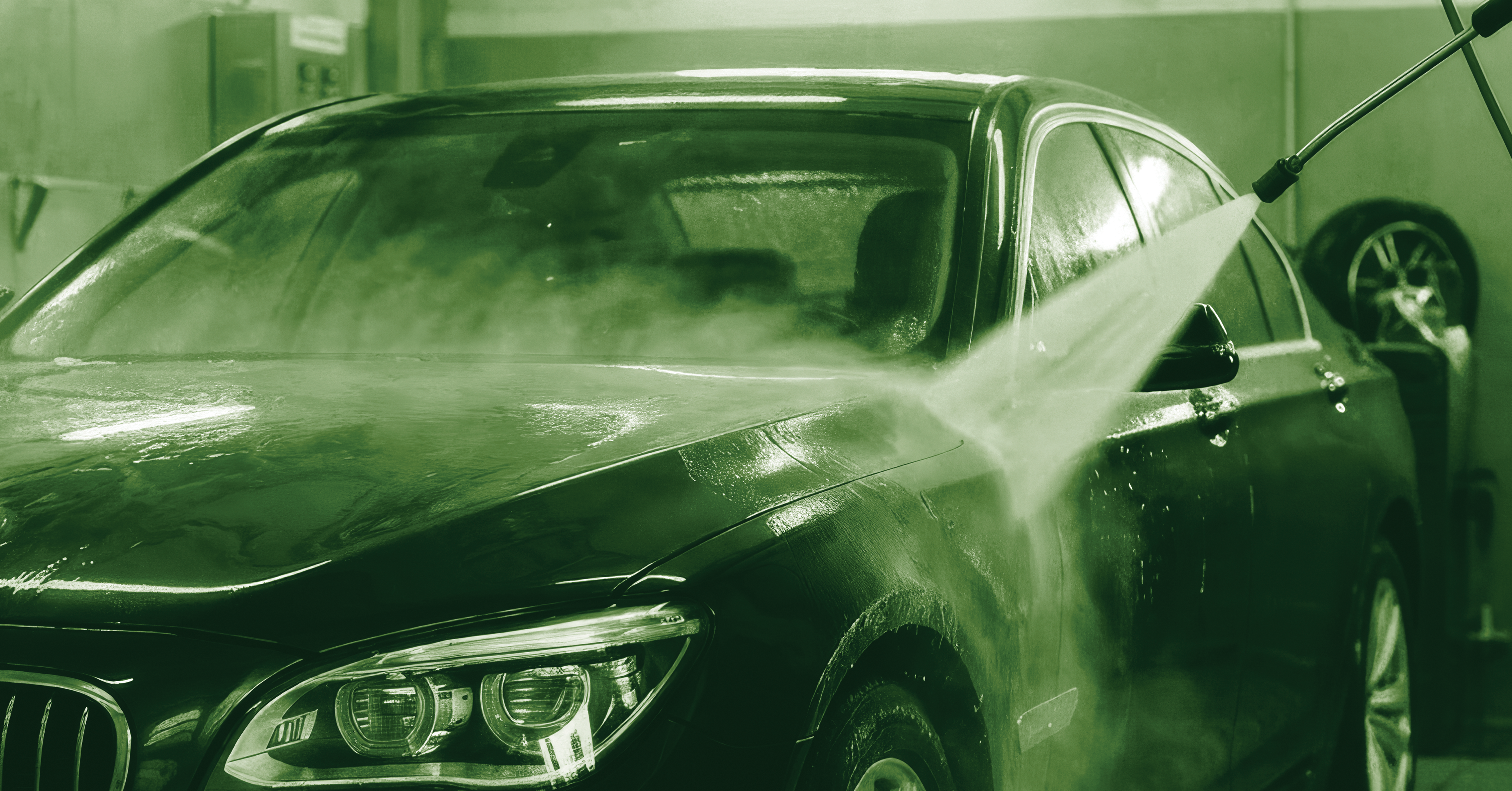
Yes. Steam car wash is safe for paint when done correctly, since there's no brush or cloth dragging grit across the surface the way a careless wash can. The heat lifts dirt without the abrasion that causes swirl marks and fine scratches.
Steam car wash at home is safe for both paint and interior when it's done with controlled heat and low pressure, and it works by turning water into high-temperature vapour that lifts dirt and kills bacteria without scrubbing or harsh chemicals. It's particularly effective on fabric seats, AC vents, door seams, and other spots a regular wash and vacuum never fully reach, while using only a few litres of water compared to a hose-based wash. The one place it needs care is around exposed electronics and infotainment screens, where excess heat or moisture can cause damage if the technician isn't controlling distance and pressure properly. This guide covers exactly how the process works, what it's good and not good for, and how it compares to a foam or water wash.
A car steam cleaning machine heats water into pressurised steam, then applies it through a nozzle to loosen dirt, grease, and grime on both interior and exterior surfaces. The heat does the work that scrubbing or chemicals would otherwise need to do, breaking down grime at a surface level so it lifts away with a wipe rather than a scrub.
Because the process uses very little water compared to a hose or pressure washer, it's often marketed as a more water-efficient option, particularly relevant in cities where water usage is an actual constraint on regular washing. Most machines used for this purpose run at high pressure and temperature, producing dry or near-dry steam rather than a wet spray, which is part of why interior surfaces don't end up soaked the way a hose-based interior clean would leave them.
Is steam car wash safe for paint? Yes, when the machine and technique are used correctly. Since there's no brush or cloth dragging debris across the surface the way a careless bucket wash can, steam actually avoids one of the most common causes of swirl marks and fine scratches.
Electronics need more care. Direct steam onto exposed wiring, infotainment screens, or unsealed switches can cause damage, since water and live electrical components don't mix well regardless of the water's form. A trained technician keeps the nozzle at a safe distance from these areas and uses lower pressure near them, which is why steam wash quality depends heavily on who's holding the nozzle, not just the machine itself.
Leather and fabric tolerate steam well in short bursts, but extended heat exposure can dry out leather over repeated sessions, so conditioning afterward is worth doing if your car has leather seats.
The practical takeaway is that steam itself isn't the risk, technique is. Asking a provider how they handle electronics and leather before booking tells you more about the outcome than the machine specifications ever will.
For anyone specifically looking at steam wash for car interior needs rather than exterior paint, this is where the method earns its reputation, sanitising fabric and hard-to-reach spots that a vacuum and wipe-down leave untouched.
1. The vehicle is parked, switched off, and checked for any exposed wiring or loose panels before starting.
2. The steam machine heats water to a high temperature, producing low-moisture, high-temperature vapour.
3. The technician works section by section, exterior panels, interior fabric, vents, and seams, keeping the nozzle at a safe distance from electronics.
4. Loosened grime is wiped away with a microfiber cloth as the steam lifts it.
5. The interior is dried and ventilated before the car is closed up.
Most providers offering steam car cleaning at home follow roughly this sequence, adjusting only the order of interior versus exterior depending on which one needs more attention that day.
Drying matters more after a steam wash than most people expect, since leftover moisture in tight spaces like door seams, vents, and under seats can lead to a musty smell or, worse, corrosion around electrical connectors if it isn't addressed.
Open all doors and windows for at least 20 to 30 minutes after a steam session to let trapped moisture escape, and run the car's blower on a low fan setting to help air circulate through the vents. Avoid leaving the car sealed and parked in the sun immediately after, since trapped humidity in a closed cabin doesn't evaporate as quickly as people assume.
Steam cleaning solves specific problems well, but it isn't a universal replacement for every other wash method, and treating it as one usually leads to disappointment on the exterior side.
| Factor | Water Wash | Foam Wash | Steam Wash |
|---|---|---|---|
| Best for | Light daily dust | Regular full exterior wash | Interior sanitising, odour, tight spots |
| Water usage | Higher | Moderate | Low |
| Chemical use | Minimal | Some (soap) | None |
| Paint safety | Moderate | High | High, if done correctly |
| Removes heavy exterior grime | Limited | Yes | Limited alone |
None of these fully replace each other. A foam pre-wash followed by a steam finish for the interior covers more ground than either one alone, since foam handles exterior grime lift and steam handles interior sanitisation.
Steam cleaning isn't something to do on the same weekly schedule as an exterior wash. Most cars only need an interior steam session every two to three months, or sooner if the car regularly carries food, pets, or muddy shoes.
Steaming more often than the car actually needs adds cost without much additional benefit, since the main gains, sanitising and odour control, don't compound significantly with extra frequency.
Amaron Assist's at-home car wash in Hyderabad uses a professional foam-based process rather than steam, covering a foam exterior wash, interior vacuuming, and dashboard cleaning, starting at ₹699. It's a different technique aimed at the same goal, a thorough, paint-safe clean without a trip to a workshop. Book through the Amaron Assist app or call 1800-5715858.
Yes. Steam car wash is safe for paint when done correctly, since there's no brush or cloth dragging grit across the surface the way a careless wash can. The heat lifts dirt without the abrasion that causes swirl marks and fine scratches.
Not when done correctly. A trained technician keeps the steam nozzle at a safe distance from exposed wiring, infotainment screens, and unsealed switches, using lower pressure near them. Damage typically comes from careless technique, not the steam process itself.
Steam car wash price in India typically ranges from ₹400 to ₹900 per session, depending on vehicle size and whether it's paired with a foam exterior wash. Standalone interior steam sessions usually sit at the lower end of this range.
Open all doors and windows for at least 20 to 30 minutes after a steam session, and run the blower on a low setting to help moisture escape from vents and seams. Skipping this step risks a musty smell or corrosion near electrical connectors.
Neither replaces the other. Foam wash is better for lifting exterior grime before a wipe-down, while steam wash is better for sanitising fabric, vents, and tight interior spaces. Many detailers use foam for the exterior and steam to finish the interior.

In the domain of two-wheeler batteries, Amaron emerges as a symbol of reliability. Their products are meticulously designed using advanced technologies to ensure longevity.