
Get safe first - hazards on, move off the road if possible - then check for an obvious cause like lights left on before trying a jump-start or calling for help.
 customercare@amararaja.com
 1800-571-4848
-
- Follow us:


customercare@amararaja.com1800-571-4848 Amaron
Share this blog


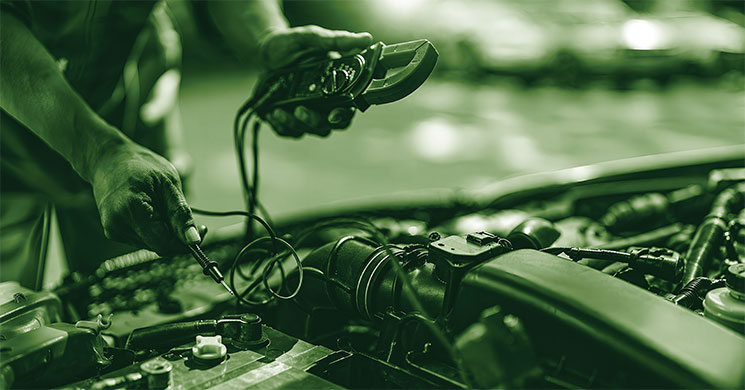
If your car battery has died, work through this order: check for an obvious cause (lights left on, a loose terminal), try a jump-start if you have cables or a portable jump starter, attempt a push-start if it's a manual car and jump-starting isn't possible, and call for battery help if none of these work. Getting battery assistance near me through your insurer, a local mechanic, or a doorstep battery service is usually faster than trying to diagnose the exact fault yourself on the roadside.
A dead battery rarely picks a convenient moment - it's usually a parking lot, a highway shoulder, or somewhere with no mechanic in sight. The instinct is to panic or start guessing, but working through a clear sequence gets you moving again faster than trial and error. The steps below are ordered exactly how you'd actually want to work through them, from the first thing to check through to who to call if nothing gets the car moving.
If you're on a live traffic lane or a highway shoulder, safety comes before troubleshooting. Switch on your hazard lights, and if the car can be moved even a short distance, steer it as far off the road as possible. Our dedicated breakdown safety checklist covers this in full detail if you want the complete picture - the short version here is: hazards on, move off the road if you can, stay clear of moving traffic while you work through the rest of these steps.
Turn the key or press start and listen carefully. Complete silence or a rapid clicking sound points to the battery. A single loud click without cranking is more likely the starter motor. If the engine cranks normally but won't fire, the issue is probably fuel or ignition related, not the battery at all - in which case jump-starting won't help, and it's worth skipping straight to calling for help rather than wasting time on the next few steps.
In Indian conditions specifically, extreme summer heat is one of the most common reasons a battery dies without much warning - sustained high temperatures can cut a battery's effective life by close to half, which is why battery-related breakdowns spike noticeably during the hottest months. If your battery is a couple of years old and this is happening during a heatwave, that context alone makes a battery fault more likely than anything else.
If you have jumper cables and another vehicle nearby, or a portable jump starter, this is the fastest way to get moving again. Connect red to positive on both batteries, then black to negative on the working battery and to an unpainted metal point on your car - never the dead battery's negative terminal directly. Let the working car run for two to three minutes before attempting to start yours, and once it starts, drive for at least 20-30 minutes to let the alternator recharge the battery properly.
Our dedicated guide on jump-starting versus battery replacement covers the full process and how to tell afterward whether the battery just needed a boost or needs replacing - worth reading once you're safely back home.
This only works on manual transmission cars, but it's worth knowing if you're stuck without cables or another vehicle. With at least one or two people pushing (or on a slight downhill slope), get the car rolling to around 10-15 km/h, then with the clutch pressed in, shift into second gear, release the clutch quickly while giving a small amount of throttle, and the engine should turn over and start. This won't work on automatic transmission cars, and it's not something to attempt on a busy road - only try this somewhere safe and with enough space.
If a jump-start and a push-start (where applicable) haven't worked, the battery has likely failed completely or something else is wrong. A car battery assistance near me search at this point is more useful than trying further DIY fixes - here's who typically shows up in those results.
Saving at least one of these numbers in your phone before you actually need it is worth doing today rather than searching for one while stuck at the roadside with a weak signal.
Whether you're calling your insurer, a mechanic, or a roadside battery assistance provider, having a few details ready speeds things up considerably.
Don't treat a successful jump-start as the end of the story. Drive for a reasonable stretch to let the alternator recharge the battery, and get the battery properly tested within the next day or two rather than assuming it was a one-off. A battery that needed a jump-start once without an obvious cause - like lights left on - is worth checking properly before it strands you again somewhere less convenient.
This step matters more than it might seem at the moment. Plenty of people treat a jump-start as a complete fix and only think about the battery again when it dies a second time, often somewhere considerably less convenient than the first. A short follow-up check costs far less than another roadside episode.
Beyond a basic jump-start, emergency car battery service near me searches typically surface a few different kinds of help, and knowing the difference matters when you're deciding who to call.
Getting battery assist quickly matters, but a few common mistakes in the moment can turn a simple dead battery into a more expensive problem.
A compact jump starter pack is genuinely useful quick battery assist equipment to keep in the car, particularly if you drive alone often or travel through areas where finding another vehicle to jump from isn't guaranteed. Look for one with reverse-polarity and overcurrent protection specifically - a unit without these safeguards can damage your car's electronics if connected incorrectly, which ends up costing far more than the jump starter itself. Keep it charged periodically, since a jump starter that's been sitting unused for months may not have enough charge when you actually need it.
Once you're safely back home, getting the battery tested properly matters more than assuming the jump-start fixed everything. Amaron Assist offers doorstep battery health checks and battery support in Hyderabad, testing voltage, terminal condition, and overall charge health at your location, so you get a clear answer on whether the battery is fine or heading toward another failure - rather than finding out the hard way a second time.
Get safe first - hazards on, move off the road if possible - then check for an obvious cause like lights left on before trying a jump-start or calling for help.
No. Push-starting only works on manual transmission cars, since it relies on engaging a gear to turn the engine over, which automatic transmissions can't do the same way.
If a jump-start gets the car running and it starts normally afterward, the battery is likely fine. If it needs jump-starting repeatedly within a short period, it likely needs replacing.
Yes, if done correctly - connect the cables in the right order and avoid touching the dead battery's negative terminal directly. If you're unsure or the car has advanced electronics, professional help is safer.
Check your insurance policy or car's warranty documents first for a roadside assistance number, or contact a local mechanic you trust who can arrange an on-the-spot check.

In the domain of two-wheeler batteries, Amaron emerges as a symbol of reliability. Their products are meticulously designed using advanced technologies to ensure longevity.