 customercare@amararaja.com
 1800-571-4848
-
- Follow us:


Hello, Login/Signup
EFB Battery: Everything You Need to Know
 Amaron
10 mins read
Share this blog


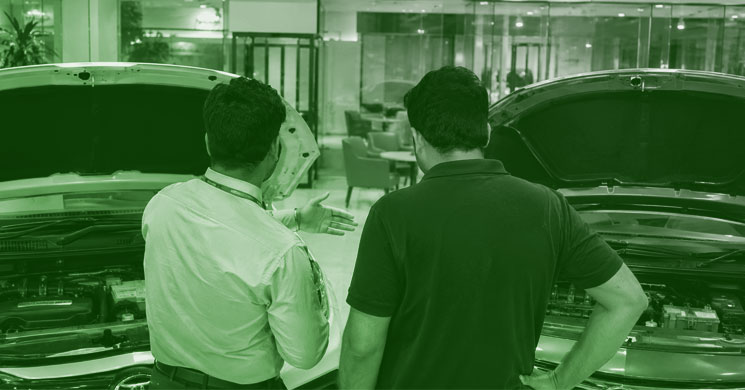
Modern vehicles with automatic start-stop systems switch off the engine when the vehicle stops and restart it when the driver is ready to move. While this helps reduce fuel consumption and emissions, it also places greater demands on the car battery. Frequent engine restarts and repeated charging cycles can wear out a conventional flooded battery faster, as it is designed primarily for starting the engine rather than handling repeated cycling. An EFB battery addresses this demand through enhanced flooded lead-acid technology. This guide explains how EFB batteries work, their benefits, vehicle compatibility, differences from AGM batteries and their prices in India.
What Is an EFB Battery? Meaning, Technology and How It Works
An EFB battery stands for Enhanced Flooded Battery. To understand the EFB battery meaning you need to start with the understanding that it’s an improved version of the conventional flooded lead-acid battery, designed to handle frequent charging and discharging. It is commonly used in vehicles with automatic start-stop systems, where the engine switches off temporarily to reduce fuel consumption.
How Is an EFB Battery Built?
EFB technology improves conventional lead-acid battery construction through a few key changes. These improvements allow an EFB battery to handle the repeated demands of start-stop driving more effectively than a conventional flooded battery.
- Reinforced positive plates: Help the battery withstand repeated charge-discharge cycles.
- Specialised separators: Help maintain the stability of the internal battery components.
- Enhanced active materials: Improve charge acceptance and cycling performance.
How Does an EFB Battery Work?
In start-stop vehicles, the battery also supplies power to electrical systems when the engine switches off at traffic signals. It then supports repeated engine restarts as the vehicle moves through traffic. A standard passenger-car EFB battery typically operates at 12V. Its working process involves three stages:
- Starting: The battery supplies a high current to the starter motor to crank the engine.
- Power supply: It powers the vehicle's electrical systems, including lights, infotainment and control units.
- Recharging: The alternator replenishes the battery's charge while the engine runs.
Key Features and Benefits of an EFB Car Battery
An EFB battery is built to handle the repeated charging and discharging that comes with start-stop driving. Compared with a conventional flooded battery, it has a tougher internal construction, and that gives it some clear advantages:
- Higher cycle life: Reinforced plates and improved active materials help the battery withstand more charge-discharge cycles, making it suitable for frequent engine restarts in city traffic.
- Improved charge acceptance: EFB technology allows the battery to absorb charge more effectively, helping replenish energy during shorter periods of driving.
- Better resistance to partial discharge: It handles repeated partial discharges better than conventional flooded batteries, which is useful when the engine frequently switches off at traffic signals.
- Reliable starting performance: Supports repeated engine starts during stop-start operation without compromising its primary function of starting the car.
- Vibration resistance: Reinforced internal construction helps the battery withstand vibrations caused by uneven roads and regular driving.
- Low maintenance: Many EFB models are sealed and maintenance-free, eliminating the need for routine electrolyte top-ups.
Which Vehicles Need an EFB Battery?
EFB technology is primarily used in vehicles equipped with automatic start-stop systems. These systems switch off the engine when the vehicle is stationary and restart it when the driver presses the accelerator or releases the brake.
Vehicles That Use EFB Batteries
- Entry-level start-stop vehicles: Many vehicles with basic start-stop systems use EFB batteries because they must handle repeated engine restarts.
- Vehicles with high electrical demands: Vehicles with a lot of electrical equipment may also use EFB technology, as long as the manufacturer specifies it, because it can handle the repeated power demands from multiple systems.
- Vehicles used in heavy city traffic: Frequent stops at traffic signals and short journeys increase the number of battery charge-discharge cycles. EFB batteries are designed to handle this pattern of use.
Can You Replace an EFB Battery with a Conventional Battery?
A conventional flooded battery is not designed for the same cycling demands. Replacing an EFB with a conventional battery can lead to shorter battery life. An AGM battery may be an upgrade where the vehicle manufacturer permits it.
Amaron's DURO EFB range offers replacement options for vehicles designed for EFB technology.
EFB vs AGM Battery: Key Differences Explained
Both EFB and AGM batteries are designed for vehicles with start-stop technology. However, their internal construction and cycling capabilities differ. EFB batteries use an enhanced flooded lead-acid design, while AGM batteries use fibreglass mats to hold the electrolyte.
EFB vs AGM Comparison
| Parameter | EFB Battery | AGM Battery |
| Full form | Enhanced Flooded Battery | Absorbent Glass Mat |
| Construction | Improved flooded lead-acid design with reinforced internal components | Sealed lead-acid design with electrolyte absorbed in fibreglass mats |
| Electrolyte | Liquid electrolyte surrounding the battery plates | Electrolyte held within absorbent glass-mat separators |
| Cycle life | Handles more charge-discharge cycles than conventional flooded batteries | Generally supports more charge-discharge cycles than EFB batteries |
| Typical application | Commonly used in vehicles with basic automatic start-stop systems | Used in vehicles with advanced start-stop systems and higher electrical demands |
| Regenerative braking | Suitable for certain systems with limited energy recovery demands | Better suited to compatible systems with regenerative braking |
| Maintenance | Generally maintenance-free, depending on battery design | Sealed, maintenance-free construction |
Which One Should You Choose?
- EFB: Suitable for vehicles designed to operate with EFB technology and basic start-stop functionality.
- AGM: Generally preferred for vehicles with advanced start-stop systems, regenerative braking and higher cycling demands.
- Upgrading: Some EFB-equipped vehicles can be upgraded to AGM if the vehicle manufacturer supports it. Replacing an AGM battery with EFB is not recommended.
When Should You Replace Your EFB Battery?
An EFB battery can show several signs of deterioration as it approaches the end of its service life. A professional battery health test can check its voltage, state of charge and starting capacity. Replace it when testing confirms deterioration, or it can no longer meet the vehicle's power requirements. Watch for these warning signs:
- Slow engine cranking: The engine takes longer than usual to start, suggesting reduced starting capacity.
- Start-stop system stops working: The system may switch off when the battery charge or health is insufficient. This does not always mean the battery has failed.
- Dashboard battery warning: The warning light may point to a battery or charging system issue.
- Electrical problems: Headlights may dim, or electronic functions may behave inconsistently.
- Repeated discharge: The battery keeps losing charge despite regular driving.
Conclusion
An EFB battery is designed to handle the frequent engine restarts and repeated charging cycles of vehicles with start-stop systems. Before buying one, check the battery technology recommended for your vehicle and match its capacity, CCA and physical specifications. Also compare warranty coverage, price and after-sales support. The Amaron DURO EFB range provides battery options for compatible vehicles that require EFB technology.

×
In the domain of two-wheeler batteries, Amaron emerges as a symbol of reliability. Their products are meticulously designed using advanced technologies to ensure longevity.