
No. Grinding brakes mean reduced stopping power and worsening damage with continued use. Get it inspected as soon as possible rather than waiting.
 customercare@amararaja.com
 1800-571-4848
-
- Follow us:


customercare@amararaja.com1800-571-4848 Amaron
Share this blog


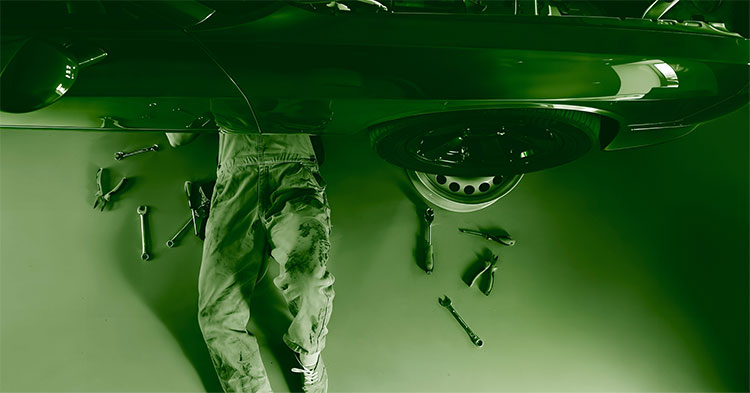
A car making noise almost always points to a specific system based on the type of sound and exactly when it happens. A squeal on startup usually means a belt, a grind under braking means your pads, a click when turning the key means your battery or starter, and a knock from the engine bay means something more serious worth checking immediately. Matching the sound to the moment it occurs is the fastest way to narrow down what's actually wrong before you even open the bonnet.
A squealing noise when starting car, especially on cold mornings, almost always traces back to the serpentine belt. A few things cause it:
This one's usually not urgent in the sense of immediate danger, but a belt that fails completely can affect your alternator, power steering, or AC compressor depending on what it drives, so it's worth having checked rather than ignored.
A grinding noise when braking is one of the noises worth treating as urgent. Common causes include:
Grinding brakes mean reduced stopping power and the risk of it getting worse with every kilometre you drive on them. This is a drive-it-in-for-inspection-now noise, not a wait-and-see one.
The pattern of the click matters here. A clicking noise when starting car that's rapid usually points to the battery, while a single, solitary click usually points to the starter motor or its solenoid.
Since battery and starter issues sound similar at first, testing the battery is usually the sensible first step before assuming it's a costlier starter problem.
A knocking noise from engine covers two very different problems that sound similar but aren't equally serious:
Telling the two apart isn't something to guess at from the sound alone, since the difference between a simple fix and a major repair is significant. Any persistent knocking from the engine bay is worth getting diagnosed rather than driven through.
A rattling noise from car is often the most mundane of the group, but not always:
| Noise | When You Hear It | Likely Cause |
|---|---|---|
| Squealing | Starting the car, especially cold mornings | Serpentine belt |
| Grinding | While braking | Worn pads, debris, or rotor issue |
| Clicking | Turning the key to start | Battery, connections, or starter |
| Knocking | From the engine bay, under load | Rod bearing wear or detonation |
| Rattling | Idle, bumps, or engine speed changes | Heat shield, exhaust, or loose parts |
Since a weak or failing battery is the most common reason behind a clicking start, it's usually the fastest thing to rule in or out before assuming a costlier starter problem. Amaron Assist offers an at-home Instant Battery Diagnostic in Hyderabad, where a trained Marshal checks your battery's health, charge retention, and terminal condition on the spot, rather than you guessing between a battery issue and a starter issue.
You can book a battery health check through the Amaron Assist app, on WhatsApp, or by calling the toll-free number 1800-5715858.
No. Grinding brakes mean reduced stopping power and worsening damage with continued use. Get it inspected as soon as possible rather than waiting.
Rapid clicking usually points to a weak battery, while a single click points more toward the starter solenoid. Testing the battery first is the simplest way to narrow it down.
Not always, but it needs proper diagnosis to know which kind you're dealing with. Rod knock is a serious mechanical issue, while knocking from low-octane fuel or timing issues is often a simpler fix.
Cold temperatures make an aging or glazed belt's rubber surface stiffer and less grippy, which is why the squeal often fades once the engine and belt warm up.
A loose or corroded exhaust heat shield is one of the most frequent causes, and it's usually a simple, inexpensive fix once identified.

In the domain of two-wheeler batteries, Amaron emerges as a symbol of reliability. Their products are meticulously designed using advanced technologies to ensure longevity.